


Ground Cover Membrane: A Complete Guide for Gardens and Landscaping

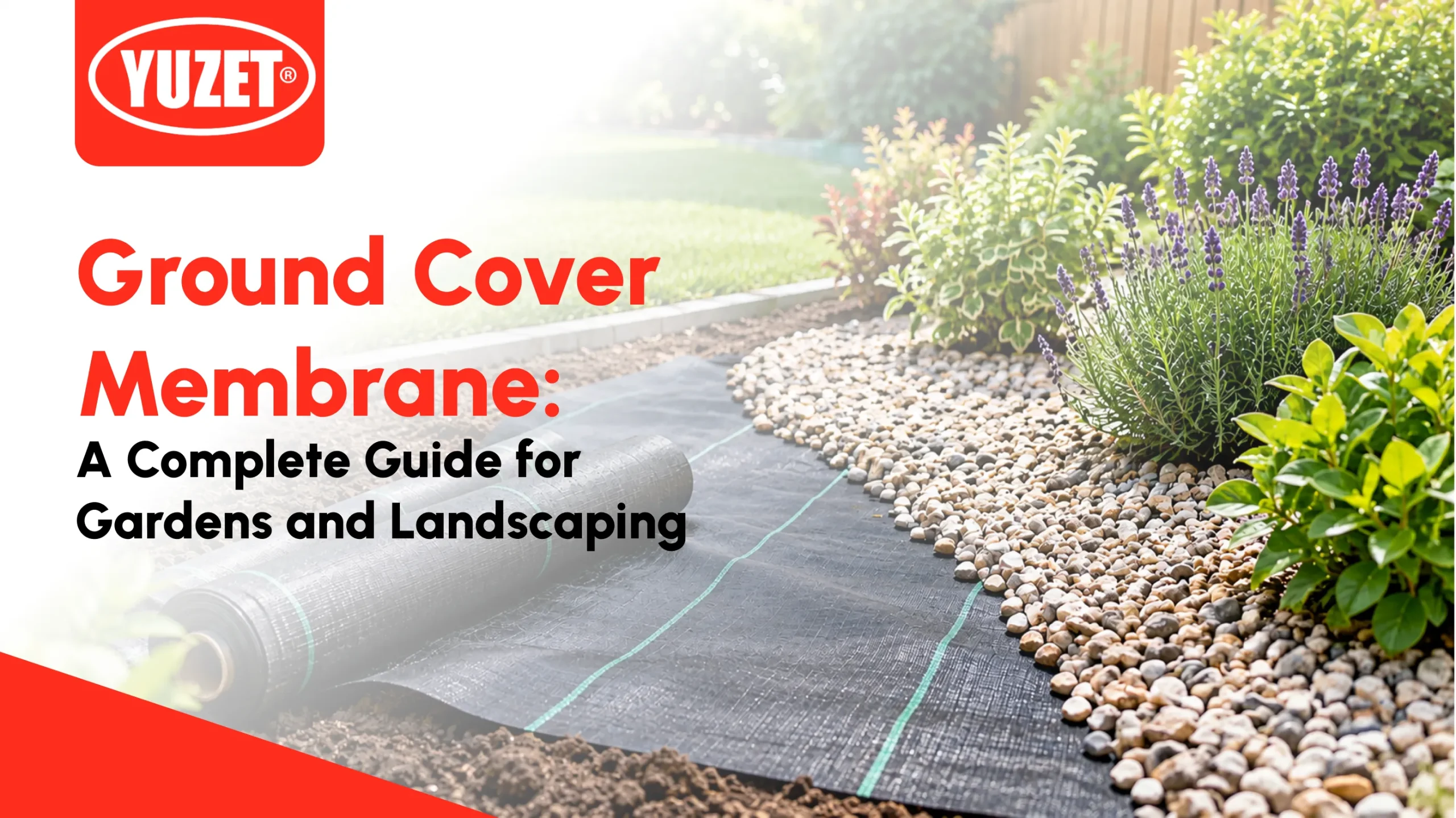
Ground cover membrane is a practical landscaping solution that helps control weeds, retain soil moisture, and create a cleaner garden appearance. This guide explains what ground cover membrane is, its key benefits, types, installation process, and how to choose the right membrane for gardens and landscaping projects.
Weeds are one of the most persistent jobs in any outdoor space. Ground cover membrane offers a practical way to reduce them. It is a permeable fabric laid over prepared soil that blocks light, so unwanted growth struggles to establish, while water can still pass through. It is widely used beneath gravel, bark and other coverings, in borders, on paths and across larger landscaping projects.
This guide explains what ground cover membrane is, its benefits, where it works well, how black and white membranes differ, and how to install it step by step. There are also practical tips and answers to common questions. Product details are taken from Yuzet’s own product pages, so always check the relevant page for current sizes and availability.
What Is a Ground Cover Membrane?
Ground cover membrane is a sheet of fabric laid over soil to suppress weeds. You will also see it called ground cover fabric, weed control membrane, weed membrane or weed barrier fabric. The terms are used almost interchangeably. Yuzet’s heavy duty black weed control fabric is described as being made from tightly woven polypropylene threads and treated to resist UV.
How it works
Weeds need light to grow well. A membrane covers the soil and blocks that light, which makes it much harder for weeds to establish underneath. According to Yuzet’s product page, the fabric is permeable to water and air, so rain can still reach the soil and the ground can drain rather than pool on the surface.
How it differs from other weed control options
- Plastic sheeting: solid plastic generally does not let water through, which can cause pooling. A permeable membrane is designed to avoid this.
- Mulch or gravel on its own: these can hide weeds, but weeds can still push up through them. A membrane underneath adds a physical barrier.
- Chemical weedkillers: a membrane works physically, without chemicals. Yuzet’s black fabric page makes the same point.
- Geotextiles: these are engineered fabrics typically used for separation, filtration and drainage. There is some overlap. Yuzet’s white ground cover is described as a woven geotextile, and Yuzet also lists woven and non-woven geotextile fabrics for soil stabilisation, separation, filtration and drainage.
Where it is commonly used
Typical uses include home gardens, allotments, nurseries, general landscaping, and beneath paths and driveways, where Yuzet says it can help stabilise the ground while limiting weed growth.
Benefits of Ground Cover Membrane
The main practical advantages are:
- Reduced weed growth: blocking light limits weeds beneath the fabric. It is not a guarantee against every weed (see the FAQs).
- Less maintenance: fewer weeds mean less hoeing, pulling and spraying over time.
- Tidier landscaped areas: the membrane also helps keep gravel or bark from mixing into the soil below.
- Suits decorative coverings: Yuzet says its membranes can be used on their own or covered with mulch, gravel or stones.
- Permeable design: water and air can pass through, according to Yuzet’s product information.
- Durable materials: Yuzet describes its black and white fabrics as woven polypropylene and UV resistant. I have not made lifespan claims because the product pages do not give a verifiable figure. Ask Yuzet directly if you need one.
- Chemical-free approach: the fabric suppresses weeds physically rather than chemically.
For a smaller project, Yuzet’s black fabric page lists DIY packs that include pegs. It lists 1m x 50m and 2m x 25m sizes, each with 40 pegs. Check the page for the current range.
Applications of Ground Cover Membrane
- Home gardens, flower beds, borders and planting areas: Yuzet’s premium green weed control fabric lists flower beds, borders and planting areas. The black fabric page also mentions gardens and allotments.
- Landscaping projects: the black, white and green pages all list landscaping uses.
- Paths, walkways and driveways: the black, white and green pages all list these. The white page also mentions it as an underlayment for gravel or stone.
- Gravel, bark and decorative stone areas: Yuzet says the black fabric can be covered with mulch, gravel or stones.
- Nurseries and growing areas: listed on the black and white pages.
- Greenhouses: the white fabric page mentions greenhouses, as a reflective cover.
The black fabric also has planting lines, which Yuzet says help with planting in straight lines in gardens and allotments.
Black vs White Ground Cover Membrane: What's the Difference?
Neither colour is better in every situation. The right choice depends on the job.
| Black | White | |
|---|---|---|
| Appearance | Darker, discreet under gravel or bark. Yuzet says it is usually black with green planting lines. | Bright, reflective surface. |
| Light and heat | Dark surfaces generally absorb more heat. | Yuzet says it reflects sunlight, helping reduce heat build-up. |
| Typical uses (per Yuzet) | Gardens, nurseries, general landscaping, beneath paths and driveways. | Nurseries, greenhouses, reflective cover, pathways and underlayment for gravel or stone. |
| Consider it when | You want a subtle, general-purpose garden or landscaping membrane. | Temperature control or reflectivity matters, such as in nurseries or greenhouses. |
Yuzet’s white ground cover page says the reflective finish suits nurseries, greenhouses and temperature-sensitive planting. The black page adds that white membranes are especially suitable for fruit plantations, because reflected sunlight helps fruit ripen evenly.
Yuzet also offers a green option at 125gsm. It is described as blending into landscaped areas once installed.
How to Install Ground Cover Membrane
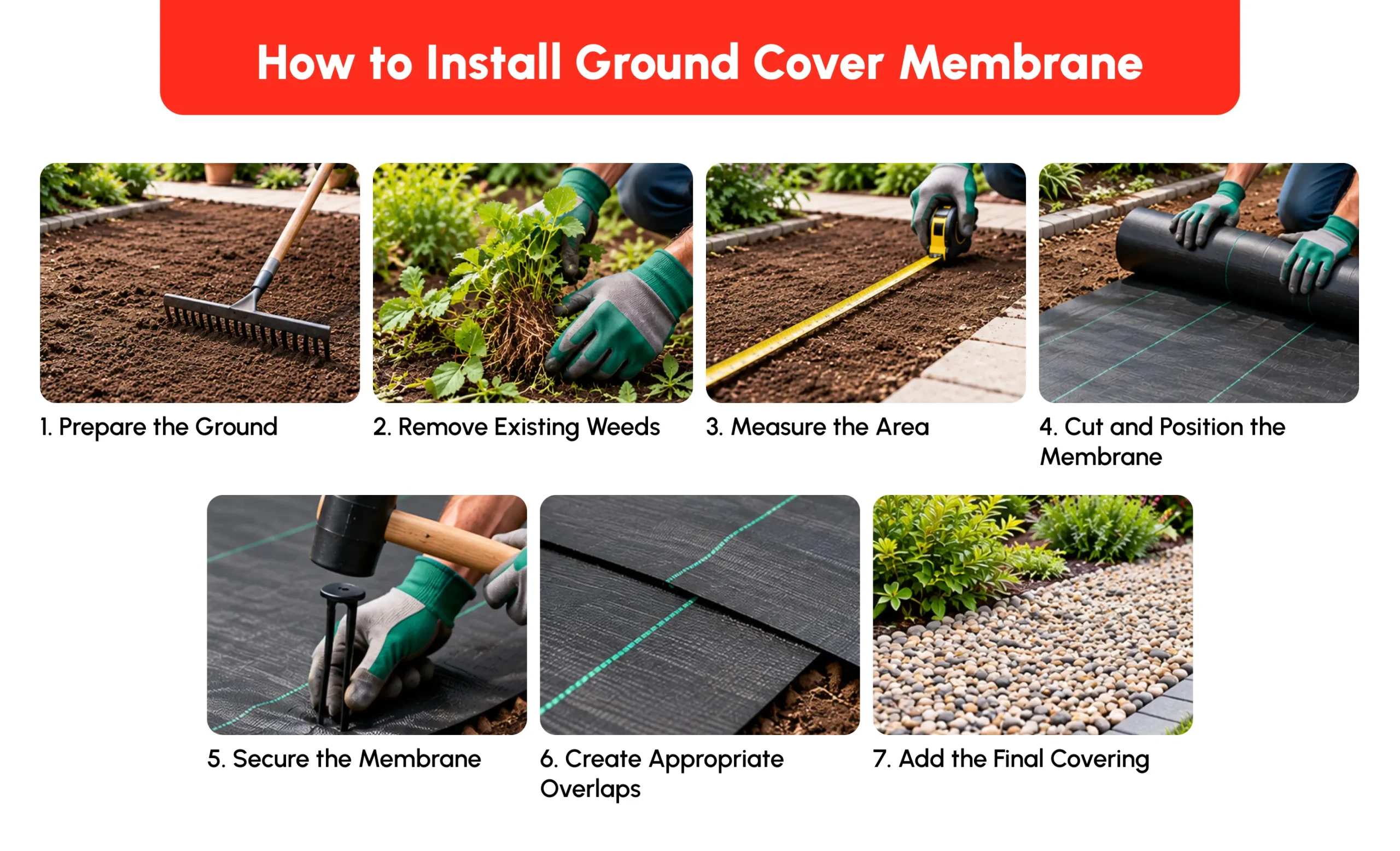
The basic method is the same for most products. These steps reflect general good practice, so check Yuzet’s product page for any product-specific guidance.
1. Prepare the Ground
Clear debris, large stones and anything sharp that could snag or puncture the fabric. Rake the soil roughly level. A flatter surface helps the membrane sit evenly and reduces low spots where water can collect.
2. Remove Existing Weeds
The membrane blocks light, but vigorous or perennial weeds already established can sometimes push through. Remove weeds first, roots included where practical.
Yuzet’s black fabric page says removing weeds is not necessary. It does recommend strimming vegetation to ground level and removing any sharp stalks that could damage the fabric. For a cleaner long-term result in planted beds, thorough clearance is usually the safer approach.
3. Measure the Area
Measure length and width, and note any curves, corners or obstacles. Allow extra for overlaps at joins and for tucking in edges. Buying slightly more than you need is usually better than falling short.
4. Cut and Position the Membrane
Unroll the membrane over the area and cut it to size with sharp scissors or a utility knife. Keep it flat and avoid stretching it.
If you are planting through the membrane, cut a small cross-shaped slit at each planting position. Fold the flaps back, plant, then fold them back around the stem. Keep cuts as small as practical, as larger openings give weeds more room.
5. Secure the Membrane
Use fixing pegs along the edges and at joins. Yuzet sells fabric anchor pegs for this, and the black fabric page says the fabric is secured with pegs. Space pegs regularly, and closer together on slopes or exposed sites where wind could lift the fabric.
6. Create Appropriate Overlaps
Where two sections meet, overlap them rather than butting the edges. A gap lets light in and gives weeds an entry point. A common rule of thumb is roughly 10 to 15 cm, but Yuzet’s pages do not specify an overlap. That figure is general practice, not a Yuzet recommendation. Peg through both layers.
7. Add the Final Covering
Cover the membrane with gravel, bark chippings, decorative stone or mulch if you want a finished look. The covering should hide the fabric completely and be deep enough to stay in place. Yuzet’s black fabric can be used on its own or covered, depending on the look you want.
Ground Cover Membrane Installation Tips
- Don’t skip preparation. Most problems trace back to a rushed start. Sharp objects, uneven ground and leftover weeds all cause trouble later.
- Deal with weeds before laying. Established perennials are the most likely to break through.
- Keep the fabric flat. Wrinkles and folds create gaps and make the covering uneven.
- Secure the edges and joins. These are the areas most likely to lift or open up.
- Overlap sections. A gap between sheets defeats the purpose of the membrane.
- Cut carefully around plants. Make small, deliberate cuts and fold the flaps back neatly.
- Check it periodically. Look for lifted edges, exposed areas or displaced pegs, especially after strong winds, and refix as needed.
- Consider the surface covering. Bark and mulch break down over time, and organic material building up on top can give weed seeds somewhere to root. Topping up or clearing debris helps.
- Match the product to the job. A membrane for a decorative border may not suit a driveway or site-access area. If in doubt, ask the supplier.
Why Choose Yuzet Ground Cover Membrane?
This section covers only what Yuzet’s own pages say. The range includes black, white and green options, plus fixing pegs, so you can source the membrane and fixings from one place. The black fabric page lists roll sizes for garden centre, horticultural and DIY use, and says custom sizes can be produced on request.
The pages also give some specifics. The green fabric is listed as 125gsm woven and described as easy to cut and secure. The black and white fabrics are described as UV resistant woven polypropylene. Yuzet’s black fabric page says its team has been developing products for 15 years and can be phoned for advice. That is Yuzet’s own statement, not independently verified.
Ordering on Yuzet’s site currently requires logging in or creating an account, so you can browse the full Yuzet product range before deciding.
Conclusion
Ground cover membrane is a permeable fabric that blocks light to suppress weed growth while letting water through. It helps reduce maintenance, keeps borders, paths and gravel areas tidier, and works beneath gravel, bark or stone. It suits gardens, allotments, nurseries and general landscaping.
Black and white membranes suit different jobs, so choose based on your application. Correct installation matters more than most people expect. Preparing the ground, clearing weeds, securing edges and overlapping joins largely determine how well the membrane performs.
If you are planning a project, you can explore Yuzet’s ground cover membrane and weed control fabric range. If you have questions about sizes or suitability, contact the Yuzet team.
Frequently Asked Questions (FAQs)
It is used to suppress weeds and keep landscaped areas tidy. Common uses include garden beds, paths, driveways and areas covered with gravel or bark. According to Yuzet, it is also used in nurseries and for general landscaping.